

Why Learn SAP CPI in 2026? Career Scope, Salary & Future
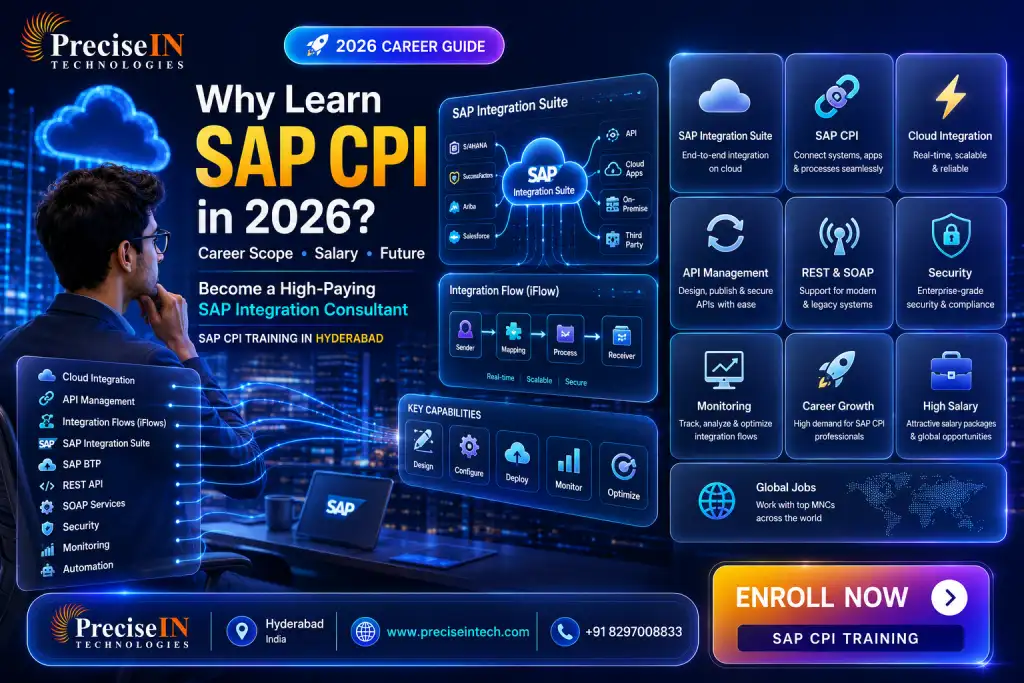
As businesses continue their digital transformation journey, seamless integration between applications, cloud platforms, and enterprise systems has become a top priority. Organizations implementing SAP S/4HANA, SAP Business Technology Platform (SAP BTP), and cloud-based solutions require secure, scalable, and intelligent integration capabilities. This growing demand has made SAP Cloud Platform Integration (SAP CPI), now known as SAP Cloud Integration within SAP Integration Suite, one of the most valuable SAP technologies to learn in 2026.
If you are planning to build a successful career in the SAP ecosystem, learning SAP CPI can open doors to excellent job opportunities, attractive salary packages, and long-term career growth. Whether you are a fresher, software developer, SAP consultant, middleware professional, or integration engineer, SAP CPI skills are highly sought after by companies worldwide.
Looking for professional SAP CPI Training in Hyderabad? This comprehensive guide explains why SAP CPI is one of the best technologies to learn in 2026, explores career opportunities, salary trends, industry demand, and how the right training can help you become a certified SAP CPI consultant.
What is SAP CPI?
SAP Cloud Platform Integration (SAP CPI) is SAP’s cloud-based integration platform that enables organizations to connect SAP and non-SAP applications securely. As a core service within SAP Integration Suite, SAP CPI simplifies communication between cloud applications, on-premise systems, databases, APIs, third-party applications, and enterprise software.
Instead of building complex point-to-point integrations, SAP CPI provides a centralized platform where developers can create, manage, monitor, and secure integration flows using pre-built connectors and enterprise integration patterns.
Today, SAP CPI is widely used for integrating:
- SAP S/4HANA
- SAP SuccessFactors
- SAP Ariba
- SAP Concur
- SAP IBP
- SAP Commerce Cloud
- Salesforce
- Microsoft Dynamics
- Oracle Applications
- REST APIs
- SOAP Web Services
- Third-party Cloud Applications
Why is SAP CPI Important in 2026?
Modern enterprises no longer rely on a single software application. Instead, they operate multiple cloud platforms, ERP systems, CRM solutions, HR applications, e-commerce platforms, finance systems, and external APIs that need to exchange data securely and efficiently.
SAP Integration Suite, powered by SAP CPI, has become SAP’s strategic integration platform for connecting these systems. As organizations migrate from SAP ECC to SAP S/4HANA and adopt cloud-first architectures, the demand for SAP CPI professionals continues to increase across industries.
This makes SAP CPI one of the most future-proof SAP technologies for professionals looking to build long-term careers in enterprise integration.
Top Reasons to Learn SAP CPI in 2026
1. High Demand Across Industries
Companies implementing SAP S/4HANA require seamless integration between SAP applications and third-party software. SAP CPI has become the preferred integration platform for these projects, resulting in a significant increase in demand for skilled SAP CPI consultants.
Industries actively hiring SAP CPI professionals include:
- Information Technology
- Manufacturing
- Healthcare
- Retail
- Pharmaceuticals
- Automotive
- Telecommunications
- Logistics
- Banking & Financial Services
- Oil & Gas
- Government Organizations
As cloud adoption accelerates globally, organizations continue investing in SAP Integration Suite, making SAP CPI skills increasingly valuable.
2. Excellent Career Opportunities
Learning SAP CPI opens multiple career paths across technical and functional SAP domains. Professionals with SAP CPI expertise are responsible for designing integration scenarios, developing iFlows, managing APIs, securing enterprise communication, and connecting SAP with non-SAP applications.
Popular SAP CPI job roles include:
- SAP CPI Consultant
- SAP Cloud Integration Developer
- SAP Integration Suite Consultant
- SAP Middleware Consultant
- SAP Technical Consultant
- SAP BTP Integration Consultant
- Integration Architect
- Enterprise Integration Consultant
- Cloud Integration Specialist
- SAP Solution Architect
These roles are available in consulting companies, multinational corporations, product-based organizations, implementation partners, and global system integrators.
3. Strong Global Demand
SAP CPI professionals are in demand not only in India but also across international markets. Countries actively recruiting SAP integration consultants include:
- India
- USA
- Canada
- UK
- Australia
- Singapore
- UAE
- Germany
- Netherlands
- Other European countries
As organizations continue their digital transformation initiatives, experienced SAP CPI consultants have opportunities to work on global implementation projects and remote consulting engagements.
SAP CPI Career Scope in 2026
The career scope of SAP CPI continues to expand as more enterprises adopt SAP Business Technology Platform (SAP BTP) and SAP Integration Suite. Organizations require professionals who can build secure, scalable, and efficient integrations across cloud and on-premise environments.
With expertise in SAP CPI, professionals can work on:
- Enterprise Application Integration
- Cloud Integration Projects
- API Development
- Digital Transformation Initiatives
- SAP S/4HANA Migration Projects
- Hybrid Integration Scenarios
- B2B Integration
- EDI Implementations
- Process Automation
- Cloud Migration Projects
As SAP continues investing in cloud technologies, SAP CPI remains one of the most strategic skills within the SAP ecosystem.
Ready to build a successful career in SAP Integration? Join our SAP CPI Training in Hyderabad and gain practical experience through live projects, hands-on labs, expert mentoring, certification guidance, and placement assistance.
SAP CPI Salary in India & Worldwide
One of the biggest reasons professionals choose SAP CPI is its excellent earning potential. As organizations increasingly adopt SAP S/4HANA, SAP Business Technology Platform (SAP BTP), and cloud-native integration solutions, skilled SAP CPI consultants continue to command competitive salaries.
Your salary depends on several factors, including experience, technical expertise, certifications, project exposure, company size, and location. Professionals with hands-on implementation experience in SAP Integration Suite, API Management, and enterprise integration typically receive higher compensation packages.
| Experience Level | Average Salary (India) |
|---|---|
| Freshers (0–2 Years) | ₹5 – ₹8 LPA |
| Junior Consultant (2–4 Years) | ₹8 – ₹15 LPA |
| Mid-Level Consultant (4–7 Years) | ₹15 – ₹25 LPA |
| Senior Consultant (7–10 Years) | ₹25 – ₹35 LPA |
| Solution Architect (10+ Years) | ₹35 LPA and Above |
Note: Salaries vary depending on the organization, location, certifications, project experience, and overall technical expertise.
Skills You Will Learn in SAP CPI Training
A well-structured SAP CPI course focuses on practical implementation rather than just theory. During professional training, you’ll learn industry-standard integration concepts through hands-on exercises, assignments, and real-time projects.
At PreciseIN Technologies, our SAP CPI Training in Hyderabad is designed according to current industry requirements.
The course covers:
- Introduction to SAP Integration Suite
- SAP Cloud Platform Integration (SAP CPI)
- Enterprise Integration Patterns
- Integration Flows (iFlows)
- Message Mapping
- Graphical Mapping
- XSLT Transformations
- Groovy Scripting
- Content Modifiers
- Exception Handling
- Message Routing
- Security and Authentication
- OAuth Authentication
- REST APIs
- SOAP Web Services
- OData Services
- IDoc Integration
- SFTP Integration
- SuccessFactors Integration
- SAP S/4HANA Integration
- API Management Basics
- Monitoring and Troubleshooting
- Real-Time Integration Projects
- Interview Preparation
- Certification Guidance
Who Should Learn SAP CPI?
SAP CPI is suitable for professionals from various technical backgrounds. Whether you are beginning your SAP career or upgrading your skills, learning SAP CPI can significantly improve your career prospects.
This course is ideal for:
- Fresh Graduates
- Software Developers
- Java Developers
- SAP Technical Consultants
- SAP ABAP Developers
- SAP PI/PO Consultants
- SAP BASIS Professionals
- Middleware Developers
- Integration Engineers
- Cloud Developers
- Working IT Professionals
- System Integration Consultants
Even professionals with limited SAP experience can learn SAP CPI through structured training, guided practical sessions, and live implementation projects.
Why Companies Hire SAP CPI Professionals
Today’s enterprises require secure, scalable, and reliable integration between business applications. SAP CPI enables organizations to streamline data exchange while reducing development complexity and improving operational efficiency.
Companies hire SAP CPI professionals to:
- Integrate SAP and non-SAP applications
- Develop secure enterprise APIs
- Implement cloud integration solutions
- Connect SAP S/4HANA with third-party systems
- Automate business processes
- Improve enterprise data exchange
- Reduce integration maintenance costs
- Support digital transformation initiatives
- Build hybrid cloud integration architectures
- Optimize enterprise workflows
As cloud adoption continues to grow, SAP CPI consultants play a critical role in helping organizations modernize their IT landscape.
SAP CPI vs Traditional Integration Technologies
Traditional middleware solutions often require extensive infrastructure management and complex maintenance. SAP CPI, being a cloud-native integration platform, simplifies enterprise connectivity while offering greater flexibility and scalability.
| Traditional Integration | SAP CPI |
|---|---|
| On-Premise Infrastructure | Cloud-Based Platform |
| Complex Maintenance | Managed Cloud Service |
| Limited Scalability | Highly Scalable |
| Manual Updates | Automatic Platform Updates |
| Higher Infrastructure Costs | Lower Operational Costs |
| Limited Cloud Connectivity | Built for Cloud Integration |
Future Scope of SAP CPI
The future of SAP CPI looks exceptionally promising. As enterprises continue migrating to SAP S/4HANA Cloud and adopting SAP Business Technology Platform (SAP BTP), the need for cloud integration specialists will continue to grow.
Emerging technologies driving SAP CPI demand include:
- Artificial Intelligence (AI)
- Business Process Automation
- API Economy
- Hybrid Cloud Integration
- Multi-Cloud Architecture
- IoT Integration
- Event-Driven Architecture
- Enterprise Automation
- Digital Transformation
- SAP Integration Suite
Professionals who combine SAP CPI expertise with SAP BTP, API Management, SAP Build, and cloud-native development will enjoy excellent career opportunities over the coming years.
If you want to become job-ready with practical experience, enroll in SAP CPI Training in Hyderabad at PreciseIN Technologies and gain hands-on experience through live projects, expert-led sessions, certification guidance, and placement assistance.
Why Choose PreciseIN Technologies for SAP CPI Training in Hyderabad?
Choosing the right training institute plays a crucial role in building a successful SAP career. At PreciseIN Technologies, our training programs are designed by industry experts to help learners gain practical knowledge, real-time project experience, and job-ready skills.
Our SAP CPI Training in Hyderabad focuses on hands-on learning rather than only theoretical concepts, ensuring students are prepared for real-world implementation projects.
Why Students Choose PreciseIN Technologies
- Industry-oriented curriculum aligned with current SAP Integration Suite technologies
- Experienced trainers with real-time implementation expertise
- Hands-on practical sessions and live projects
- Interview preparation and mock interview sessions
- Resume building support
- SAP certification guidance
- Flexible online and classroom training
- Weekend and weekday batches
- Lifetime access to learning materials
- Placement assistance for eligible candidates
SAP CPI Learning Roadmap
To become a successful SAP CPI consultant, follow this structured learning path:
- Understand SAP fundamentals and enterprise business processes.
- Learn cloud computing concepts and SAP Business Technology Platform (SAP BTP).
- Master SAP Integration Suite and SAP Cloud Integration (SAP CPI).
- Practice Integration Flows (iFlows), Message Mapping, and Groovy scripting.
- Learn API Management, REST APIs, SOAP, OData, and security concepts.
- Work on real-time integration scenarios and live projects.
- Prepare for SAP CPI certification and technical interviews.
- Apply for SAP CPI Consultant and Integration Developer roles.
Career Opportunities After Learning SAP CPI
Completing professional SAP CPI training can open opportunities across consulting firms, multinational corporations, product companies, and implementation partners.
Popular job roles include:
- SAP CPI Consultant
- SAP Cloud Integration Developer
- SAP Integration Suite Consultant
- SAP Technical Consultant
- Middleware Consultant
- Enterprise Integration Consultant
- SAP BTP Integration Consultant
- Integration Architect
- Cloud Integration Specialist
- Solution Architect
Frequently Asked Questions (FAQs)
Is SAP CPI worth learning in 2026?
Yes. SAP CPI continues to be one of the most in-demand SAP technologies due to increasing cloud adoption, SAP S/4HANA migrations, and enterprise integration requirements across industries.
Does SAP CPI have good job opportunities?
Absolutely. Organizations implementing SAP S/4HANA, SAP BTP, and SAP Integration Suite require skilled SAP CPI consultants to build secure and scalable integration solutions.
Can freshers learn SAP CPI?
Yes. With structured training, practical assignments, and live projects, freshers can build strong SAP CPI skills and start successful careers in enterprise integration.
What is the salary of an SAP CPI consultant?
Depending on skills and experience, SAP CPI professionals generally earn between ₹5 LPA for freshers and ₹35 LPA or more for experienced consultants and architects.
Is SAP CPI difficult to learn?
No. With expert guidance, hands-on practical sessions, and project-based learning, SAP CPI can be learned effectively by both beginners and experienced professionals.
Which institute offers the best SAP CPI Training in Hyderabad?
PreciseIN Technologies offers industry-oriented SAP CPI Training in Hyderabad with expert trainers, live projects, certification guidance, interview preparation, and placement assistance.
Conclusion
SAP CPI has become one of the most valuable technologies in the SAP ecosystem. As businesses continue adopting cloud platforms, SAP S/4HANA, and digital transformation initiatives, the demand for skilled SAP CPI professionals is expected to grow significantly in 2026 and beyond.
Whether you are a fresher, software developer, SAP consultant, or working professional, learning SAP CPI can help you secure high-paying job opportunities, work on global implementation projects, and build a future-proof career in enterprise integration.
Ready to Build Your Career in SAP CPI?
Ready to build a career in SAP CPI? Join PreciseIN Technologies’ SAP CPI Training in Hyderabad and gain hands-on experience with live projects, expert-led sessions, certification guidance, interview preparation, and placement assistance.
Contact us today to book your FREE demo class or download the latest SAP CPI course syllabus.
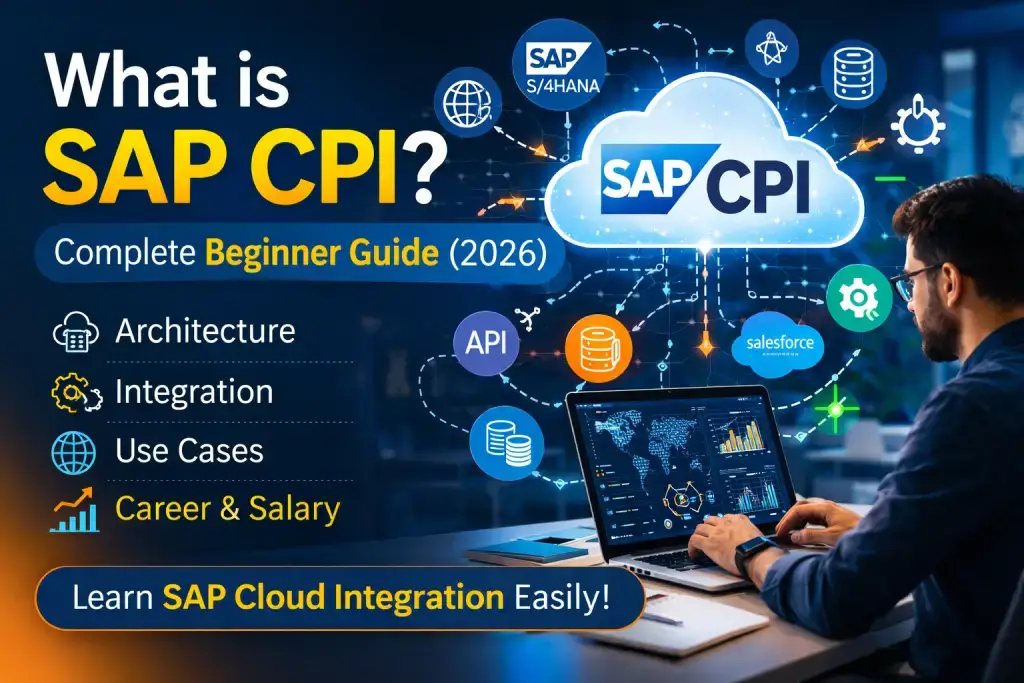
SAP CPI (SAP Cloud Platform Integration) is a cloud-based integration platform used to connect SAP and non-SAP applications securely. It enables organizations to integrate enterprise systems, automate workflows, and exchange data between different business applications.
With the increasing adoption of SAP S/4HANA and cloud solutions, SAP CPI has become one of the most important technologies in modern SAP integration architecture.
In this guide, you will learn everything about SAP CPI including architecture, features, real-time use cases, and career opportunities.
What is SAP CPI?
SAP CPI stands for SAP Cloud Platform Integration. It is a middleware solution that helps integrate multiple applications and systems within an enterprise environment.
SAP CPI is part of the SAP Integration Suite under SAP Business Technology Platform (SAP BTP).
Organizations use SAP CPI to connect:
- SAP S/4HANA
- SAP SuccessFactors
- SAP Ariba
- Salesforce
- Third-party applications
- On-premise systems
SAP CPI allows seamless communication between these systems through secure APIs and integration flows.
Why is SAP CPI Important?
Modern businesses operate multiple software systems across cloud and on-premise environments. Without integration, these systems cannot exchange data efficiently.
SAP CPI helps solve this problem by enabling:
- Secure data exchange
- Cloud-based integration
- Real-time business process automation
- API-based connectivity
- Hybrid integration between cloud and on-premise systems
Because of these capabilities, SAP CPI plays a critical role in enterprise digital transformation.
SAP CPI Architecture
The SAP CPI architecture consists of multiple components that work together to enable seamless integration.
Integration Flow (iFlow)
Integration Flow is the core component of SAP CPI used to define the data integration process between systems.
Adapters
Adapters enable connectivity between applications and SAP CPI. Examples include:
- HTTP Adapter
- SOAP Adapter
- OData Adapter
- SFTP Adapter
- IDoc Adapter
Message Mapping
Message mapping transforms data from one format to another such as XML to JSON.
Security Layer
SAP CPI provides multiple authentication methods including OAuth and certificate-based security.
Monitoring Tools
Integration monitoring allows administrators to track integration processes and identify errors.
Key Features of SAP CPI
SAP CPI provides several advanced features for enterprise integration.
Cloud Integration
Connect cloud and on-premise systems securely.
API Integration
Expose and consume APIs to integrate applications.
Message Transformation
Transform data between different formats.
Process Orchestration
Automate complex workflows across multiple systems.
Security
Secure communication using encryption and authentication protocols.
Real-Time SAP CPI Integration Scenarios
SAP CPI is used in many enterprise integration scenarios.
SAP S/4HANA to Salesforce Integration
Integrate customer data between SAP ERP and Salesforce CRM.
SuccessFactors Integration
Connect HR systems with SAP cloud solutions.
B2B Integration
Enable secure business-to-business data exchange.
API Integration
Expose SAP data as APIs for external applications.
These scenarios are commonly implemented in real SAP integration projects.
SAP CPI vs SAP PI/PO
SAP PI/PO is an older on-premise integration technology, while SAP CPI is a cloud-based integration platform.
Key differences include:
| Feature | SAP CPI | SAP PI/PO |
|---|---|---|
| Deployment | Cloud | On-premise |
| Scalability | High | Limited |
| Maintenance | Managed by SAP | Managed by company |
| Future roadmap | Strong | Gradually replaced |
Due to these advantages, most organizations are moving towards SAP CPI.
SAP CPI Career Opportunities
SAP CPI professionals are in high demand due to the increasing adoption of cloud-based SAP systems.
Popular job roles include:
- SAP CPI Consultant
- SAP Integration Developer
- SAP Middleware Consultant
- SAP BTP Integration Specialist
Companies hiring SAP CPI professionals include major IT service providers and consulting firms.
SAP CPI Salary in India
The salary of SAP CPI professionals depends on experience and skill level.
Typical salary ranges:
Entry Level: ₹5 LPA – ₹8 LPA
Mid Level: ₹10 LPA – ₹15 LPA
Senior Consultants: ₹18 LPA+
SAP CPI consultants with certification and project experience often earn higher salaries.
How to Learn SAP CPI?
To become an SAP CPI professional, you should focus on learning:
- SAP CPI architecture
- Integration flows
- Adapters and message mapping
- API integration
- Monitoring and troubleshooting
- Real-time integration scenarios
Practical training with real projects is the best way to master SAP CPI.
👉 If you want hands-on training with real-time integration projects, check our SAP CPI Training in Hyderabad.
SAP CPI is a powerful cloud integration platform that enables businesses to connect SAP and non-SAP systems efficiently. As more companies adopt cloud technologies and SAP S/4HANA, the demand for SAP CPI professionals continues to grow.
Learning SAP CPI can open excellent career opportunities in the SAP ecosystem and help professionals build expertise in enterprise integration technologies.
FAQs
What is SAP CPI used for?
SAP CPI is used to integrate SAP and non-SAP applications in cloud environments and enable secure data exchange between enterprise systems.
Is SAP CPI part of SAP BTP?
Yes, SAP CPI is part of the SAP Integration Suite under SAP Business Technology Platform.
Is SAP CPI a good career option?
Yes. SAP CPI professionals are in high demand due to increasing SAP cloud implementations.